Introduction
Our project examines the relationship between music and mental health outcomes, drawing from federal statistics, self-reported surveys, as well as a wide range of independent academic and clinical studies. While our initial dataset contained a vast assortment of relative measures, our focus aims to address influential variables surrounding the impact of musical genre and listening duration on self-reported symptoms of anxiety, depression, and insomnia. Composing data from independent public surveys accessible through the Kaggle website domain, we narrowed our scope to analyzing the correlation between musical factors and a worsened or improved mental state. We tied our findings into a predictive theorem of psychological outcomes as well as therapeutic-based treatment approaches for addressing this nation’s mental health crisis. Our research is highly relevant amidst ongoing social issues surrounding stigmatized psychological conditions, in which we chose to focus on the empirical evidence of music as a therapeutic treatment in alleviating symptoms associated with common mental health conditions. Thus, given the scope of our project along with the real-world implications of mental health as an ongoing public crisis, our team naturally gravitated toward exploring the personal motivations behind individuals’ lived emotional experiences, a sphere in which our commitment to musical impact became focal.
What inspired undertaking such a complex research initiative arose from our team’s shared fascination with how deeply music interacts with everyday emotional life. Each member, as well as a significant measure of students alike, consistently use music to navigate stress, improve focus, or regulate mood, and therefore choosing this as our leading variable felt intuitive. Further, music is a universal tool individuals engage with constantly; during their commute, at the gym, while studying, or even as an intimate coping mechanism, making it a relevant anchor for exploring mental health patterns. Due to emotional health and well-being being a widely circulated topic on social platforms and within our own circles, we felt compelled to pursue whether empirical data would reinforce these shared experiences. In addition to our personal interest in the topic, a wide variety of existing academic and clinical studies have deduced powerful connections between musical engagement and emotional outcomes, particularly within the realm of improved mood, reduced symptoms of anxiety and depression, as well as heightened cognitive function. These findings served as a foundation in guiding our approach toward analyzing whether distinct musically-affiliated behaviors (genre preference, listening habits, music inclinations) closely correlate with statistically gathered and self-reported mental health symptoms in quantifiable practices. Ultimately, this driving force shaped our core research query, which centers around how key components of music engagement influence or reflect distinct variations in anxiety, depression, and general mental health trends.
Psychobiological Factors Relating to our Research
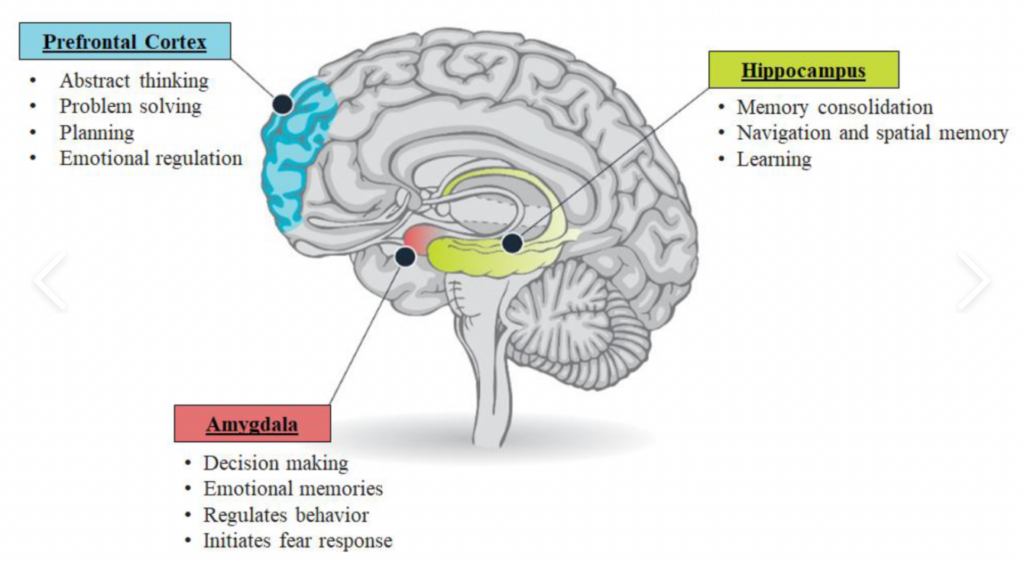
From a psychobiological perspective, music has shown to activate our dopamine system, which is a reward pathway particularly involved in motivation, pleasure, as well as reinforcement. It engages directly with our amygdala, hippocampus, and prefrontal cortex, which are crucial in emotional appraisal, memory, and regulation. Additionally, these regions are the necessary components in our decision-making, maintaining memory, and problem-solving, which are fundamentally all essential to our everyday lives. It is how we navigate through our lives. Music also modulates our body’s physiological arousal with its ability to reduce anxiety and stress, supporting relaxation and emotional regulation, and ultimately playing a significant role in maintaining our health. In order for us to understand the role that music plays in mental health, we need to accept it as a health issue because poor mental health can reduce the body’s immune system, making us more susceptible to other health concerns.
For example, when we look at PTSD within patients, its symptoms tend to cause dysregulation within emotions, memory, and physiological arousal, impairing our executive function. Although mental health conditions arise internally, they are major contributors to pressing problems–including suicide, a loss of productivity, and overall a decline in quality of life–ultimately contributing to global health issues. They tend to manifest themselves through external behaviors, permeating through every corner in an individual’s life. Music and sound interventions taps into neural reward pathways, helping to reduce hyperarousal and anxiety that is typical in trauma. We learned that music can help ground the individual, helping them slowly reconnect with their body and mitigate dissociation. In particular, slow-tempo music has shown to reduce heart rate, blood pressure, and our cortisol levels. This helps facilitate the processing of trauma and grief, stabilizing depressive mood disorders and enhancing positive affect. While there are many promising findings that contribute to our research question, evidence is still preliminary. To control this, more longitudinal research and controlled studies are needed to firmly establish the efficacy of music and mental health.
Literature Review
Overview
Drawing from the broader academic research we reviewed, several key themes emerged that helped us refine the focus of our project. Many of the studies included in our bibliography reinforce the strong connection between musical engagement and emotional regulation, noting that listening to music can meaningfully reduce symptoms of anxiety, depression, and physiological stress. Further, studies exploring musical therapy interventions consistently highlight how different forms of musical engagement, such as tempo, rhythm, or genre choice, activate specific neural pathways linked to mood stabilization and coping. Other sources explore how high-energy versus low-energy music influences arousal levels, cognitive processing, as well as emotional interpretation, serving as an informative foundation for our decision to analyze genre “energy preference” within our dataset. To gain a broader perspective of the empirical data surrounding musical engagement, as well as equip ourselves with a comprehensive analytical drive, we supplementally reviewed studies centered on listening duration. Such studies illuminated that both insufficient and excessive musical engagement can indeed correlate with psychological outcomes depending on the listener’s motivation, emotional state, and the general listening context. Concertedly, reviewing the preliminary academic studies allowed for a clearer understanding of which musical variables are most likely to influence mental health, guiding us toward our specific focus on anxiety, depression, OCD, listening habits, and genre categories.
Overlap and Distinctions
Across the literature, a major area of overlap involves consistent findings that music, particularly structured or intentional listening, can promote emotional regulation as well as reduce stress levels. Despite utilizing a wide range of different methodologies, many of the studies’ findings align with the premise that musical engagement activates neural circuitry associated with reward, relaxation, and even cognitive reframing. An overlap in such findings reinforced our group’s deliberation in narrowing our scope to primarily anxiety and depression specifically, as much of the existing research points to these areas as the most responsive to musical modulation. However, it’s crucial to note how some studies bring to light a significant nuance: while music often supports mental health, several researchers caution that emotional outcomes depend heavily on genre, lyrical content, listening context, as well as individual differences. Further, a few studies even suggest that certain types of music or excessive listening can correlate with heightened depressive symptoms, particularly when music is used for rumination rather than healthy coping. These key contradictions allowed us to tailor our approach to our own dataset with greater nuance, ensuring we didn’t assume all musical engagement is uniformly positive. Rather, existing research from these articles encouraged our team to critically scrutinize complex differences across energy levels, genre preferences, and musical status (i.e., identity) to distinguish patterns with greater precision and from a more novel, fresh lens.
Visualization Analyses
Overview
Grouped together, the academic research we examined provided a strong framework for interpreting our own data, further shaping the specific variables we chose to highlight in our study. These findings ultimately guided our visualizations, allowing us to compare real-world insights with the mental health patterns present within our dataset and integrate a more grounded, evidence-led foundation for our analysis. To undertake establishing this foundation from a visual perspective, we initially implement a broad geographical and historical landscape of comprehensive mental health trends. Through mapping average disorder prevalence by country and pairing it with a wide-spanning timeline across nearly three decades, we construct the necessary contextual background for understanding how musically related variables later weave into the vast landscape of psychological trends across diverse populations.
World Map and Timeline, Preliminary/Contextual Representation
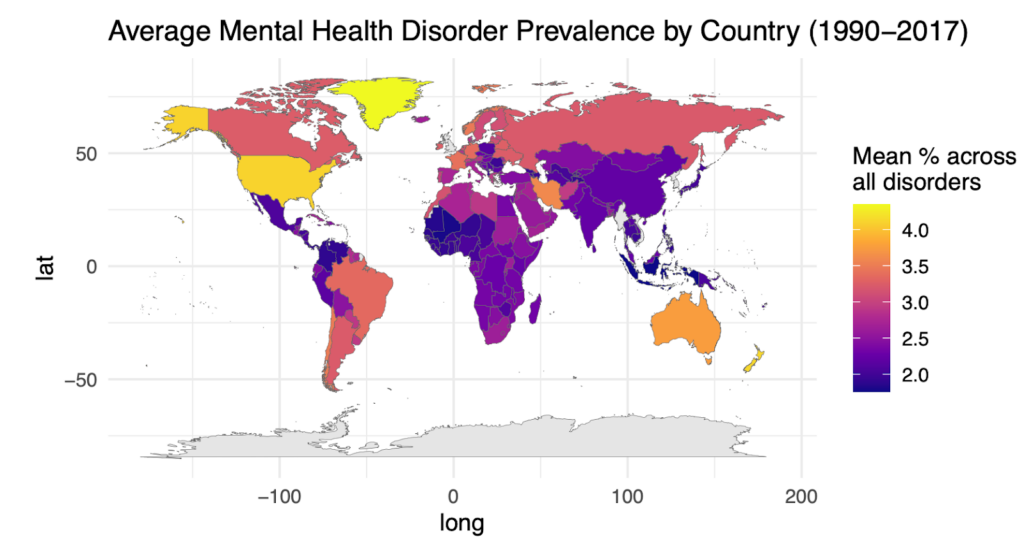
A key conceptual component of our project’s scope, prior to our more thorough analysis of visualized data surrounding music’s impact on overall mental health, involves a localized illustration of these relational patterns across the world. To highlight this, we created a map (Figure 1.1) that depicts the average mental health disorder prevalence by country, created by averaging the percentages of the population experiencing schizophrenia, bipolar disorder, eating disorders, anxiety, drug use, depression, and alcohol use disorder. Most notably apparent on this scale, Greenland is depicted as having the highest mean percentage of mental health issues, with the United States following closely behind, serving as a foundation for a more thorough exploration into mental health patterns from a regional-specific lens. In addition, our inclusion of the color gradient allows for greater contrast visibility, in which brighter shades highlight areas that consistently demonstrate higher averages across the entire 1990-2017 period. This map is critical for our project because it grants us a clear sense of where mental health issues were most concentrated globally and their longstanding trends spanning across decades. Furthermore, this visualization serves as a powerful introduction to our project’s deeper analytics, providing a contextual synopsis of the broader geospatial patterns surrounding the relationship between music and mental health. Paired with our timeline, this map serves as a foundational blueprint of our scope, examining the broader historical context of global mental health trends.
Before moving into our second visualization, a timeline tracing mental health disorder prevalence across decades, it was imperative to initially establish a global snapshot of precisely where these issues are most heavily concentrated in order to refine our data analysis. Thus, while the global map reveals key geographic areas in which mental health concerns are clustered, introducing a broad-ranging timeline provides a crucial representation of how these patterns evolved over time. In conjunction, these views cultivate a more robust context for our project, in which the map grounds our scope spatially, while the timeline grounds us historically. Therefore, pairing refined regional disparities with vast long-term trends, we’re able to more clearly understand the conditions under which music-related behaviors may emerge as coping tools, emotional outlets, or even potential risk factors. Our transition from spatial patterns to temporal trends props a comprehensive foundation for variable-specific analysis on music’s role in shaping, or adapting to, these mental health trajectories.
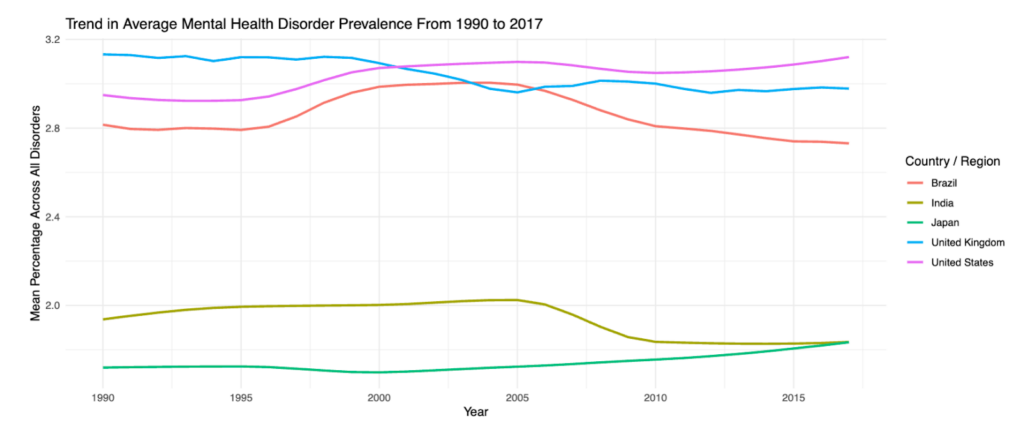
Figure 1.2 explores how average mental health disorder prevalence has changed over time amongst five culturally diverse countries; Brazil, India, Japan, the United Kingdom, and the United States. Upon refining our outlook to these key regions due to reported prevalence of mental health symptoms and high musical engagement, we chose to average the percentages of the populations experiencing specific psychiatric debilitations each year, including schizophrenia, bipolar disorder, eating disorders, anxiety, drug use, depression, and alcohol use disorder. Across the full 1990–2017 period, the United States markedly demonstrates an escalating trend, making it one of the higher-prevalence countries, whereas Brazil’s rates initially rose sharply in the early 2000s before gradually declining. The United Kingdom remains relatively stable throughout, with only minor fluctuations, whereas India and Japan remain at consistently lower rates than the other countries. These interpretive trajectories allow for informed comparisons of how different regions changed by year, illustrating a clear representation of how mental health issues evolved globally across a nearly three-decade span. Not only does this visualization provide necessary historical context to more accurately map significant trends among our data, yet also clarifies the connection between music-related factors and shifts in mental health outcomes. Even in isolation, this visual sequence promotes conceptual understanding not just of where psychiatric issues were concentrated, yet also how they developed over time, promoting a predictive analytics approach to future trends as well. While this timeline does not directly examine music-specific variables in accordance with mental health conditions, it provides a comprehensive account of mental health trends over time on a global scale, allowing us to build off of this framework and explore specific musical impact.
Representing Mental Health Variance Surrounding Musical Factors
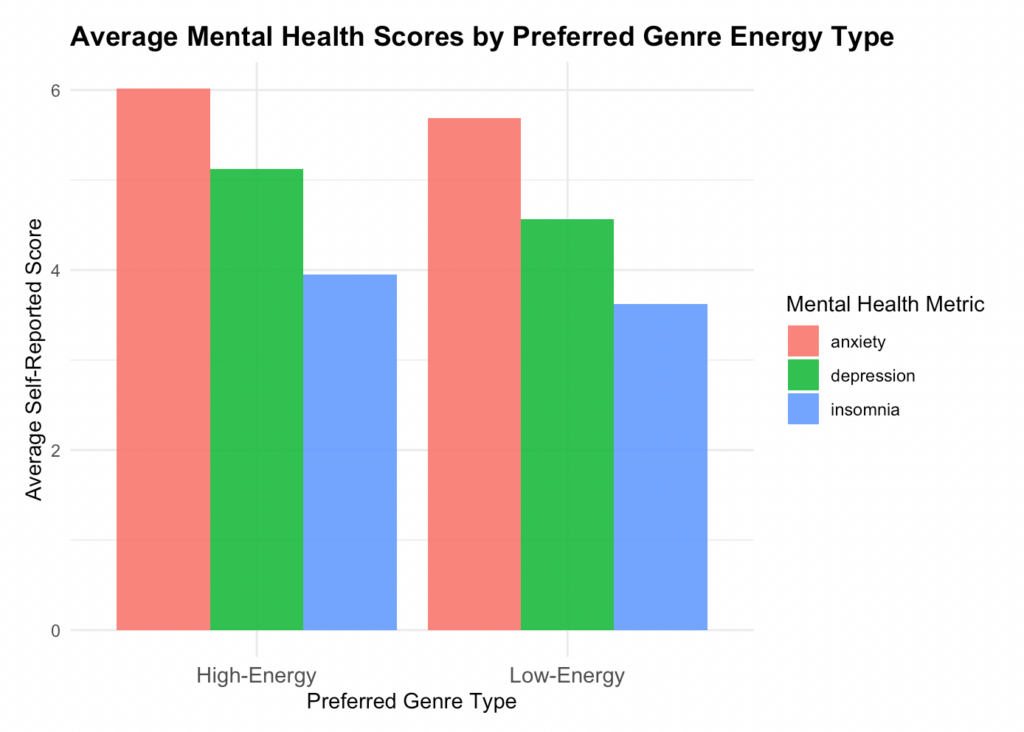
This grouped bar chart gives us a clear comparison of average self-reported mental-health scores across two listener groups (high vs. low energy music), in which this metric was conducted through a quantitative lens through calculating the average self-reported score. This chart type illuminates distinctions across two categorical groups, high energy and low energy, among three quantitative variables; anxiety, depression, and insomnia. Each color-coded cluster within Figure 1.3 represents a specified type of music genre, with the bars depicting how the mean scores of each mental health metric vary between the two types of musical energy preferences. Most notably from the visualization, the findings pinpoint that high-energy listeners report increased levels of anxiety and insomnia compared to those who prefer low-energy genres. Further, low-energy listeners (classical, folk) reported distinctly lower scores across all three mental health metrics, including self-reported depression scores appearing lower for those who listen to low-energy genres. This striking distinction not only implies stronger emotional coping benefits among lower intensity music listeners, yet also establishes an associative trend of responsive impacts of music intensity and psychiatric symptom severity.
Creating a bar chart, specifically, to visually analyze the trends between music genre and mental health metrics was necessary for greater interpretative flexibility surrounding the emotional differences associated with music-energy preferences. Thus, our visual representation directly showcases how genre energy level may correspond to various psychological states, including as a coping benefit or a limiting emotional mechanism. The results highlight how individuals drawn to slower, low-intensity genres tend to report more stable emotional well-being, whereas those who frequently engage with faster, high-intensity music appear to experience higher stress levels or reported restlessness. Although we see a correlation between high energy music genres and higher mental health metrics, this does not necessarily mean causation; rather, it reflects how musical preferences reinforce certain emotional tendencies. These findings connect to the broader idea that music functions as a tool to understand and regulate mental health, therefore emphasizing the cruciality of considering listening habits when analyzing well-being.
To build on the genre-based distinctions shown above in Figure 1.3, our next visualization shifts focus from what individuals listen to toward how they personally interpret music’s influence on their mental wellness. While genre energy levels allow us to accurately determine broader patterns tied to listening preferences, they don’t fully account for how individuals personally feel music affects their anxiety or mood daily. Further, due to music’s highly subjective nature, two individuals can essentially engage with the same genre yet consequently experience completely different emotional outcomes. This highlights the significance for our scope to extend beyond intensity alone and consider listeners’ self-perceptions. Thus, Figure 1.4 allows us to do exactly that by isolating reported changes in anxiety according to whether participants believe music worsens, improves, or has no effect on their mental health. This transition from broad musical categories to personal interpretation embeds a more nuanced layer into our analysis, allowing us to compare objective listening habits with subjective emotional experiences.
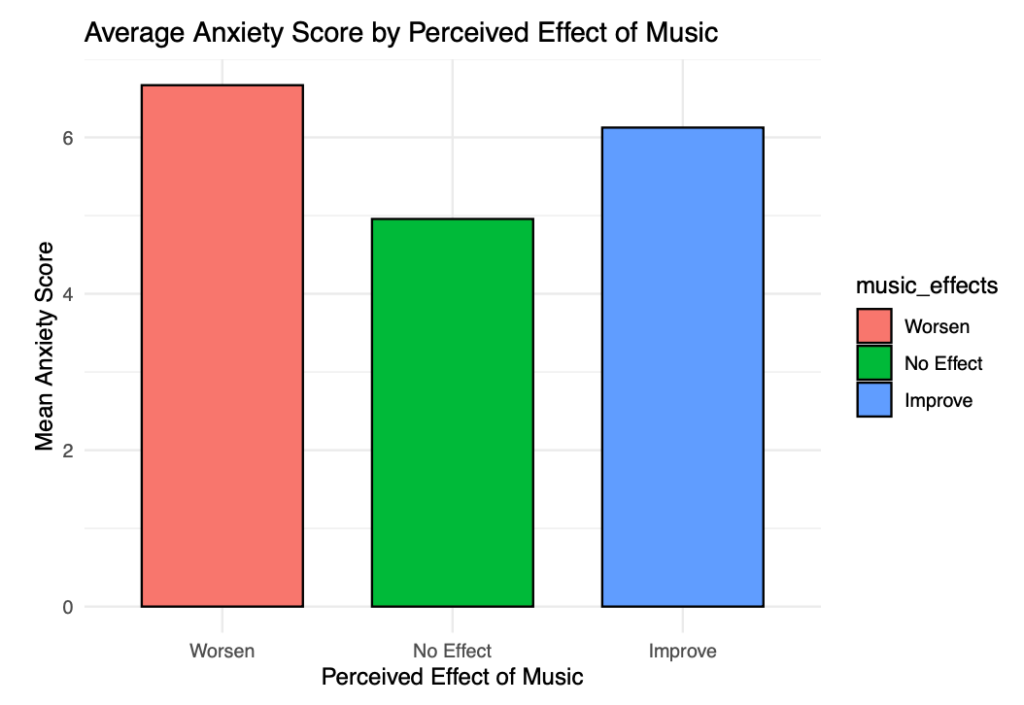
A bar chart was selected here to compare the average anxiety scores across the three categorical responses in our predictor variable, perceived effect of music: worsen, no effect, and improve. We chose this visualization style because each category stands alone as a distinct group, in which a bar chart can more clearly highlight mean differences in anxiety levels without cluttering the visual or complicating our comparison. This allows for a more intuitive visual interpretation of how individuals’ self-reported outcomes vary depending on their personal perceptions of how music impacts anxiety levels. Within the context of our project, Figure 1.4 offers a critical lens into the subjective, and more adaptive, sector of music’s real-world impact.
These findings illustrate that participants who report that music improves their mental health, in turn, generally report lower anxiety than those who believe that music worsens their mental health. However, it’s compelling to note that the group who perceived no effect correspondingly reported the lowest average anxiety score across all three categories. This unprecedented emerging pattern further suggests that the perceived emotional impact of music doesn’t automatically align rigidly with reported mental health outcomes. That said, the connection between how individuals believe music affects them versus how they veritably feel according to their mental health scores appears to be more complex than initially anticipated. Thus, these findings promote inquiry into deeper interpretations, leading to additional possible factors, beyond merely a perceived effect, that may be more influential in shaping anxiety levels. Due to these complexities and ambiguity, our team would require additional analysis to better conceptualize the reasoning behind these groups’ stark distinctions with a broader range of variables and datasets to uncover potential underlying variables.
To build on the distinction between high-energy and low-energy listeners, our group decisively extended our scope beyond group averages, examining whether these noted trends within our findings sustained on an individual level. While Figures 1.3 and 1.4 effectively capture broad categorical distinctions, they do not account for a key component in our research: how strongly an individual’s preference for certain musical genres relates to their own mental health outcomes. Therefore, to deepen our analysis, as well as determine whether such a relationship equates consistently across anxiety, depression, and insomnia, we employed a set of scatterplot visualizations. These visualizations proved beneficial for observing the directional trends within the relationship between genre preference and symptom severity, allowing for a refined interpretation of how music intensity correlates to individuals’ lived mental wellness experiences.
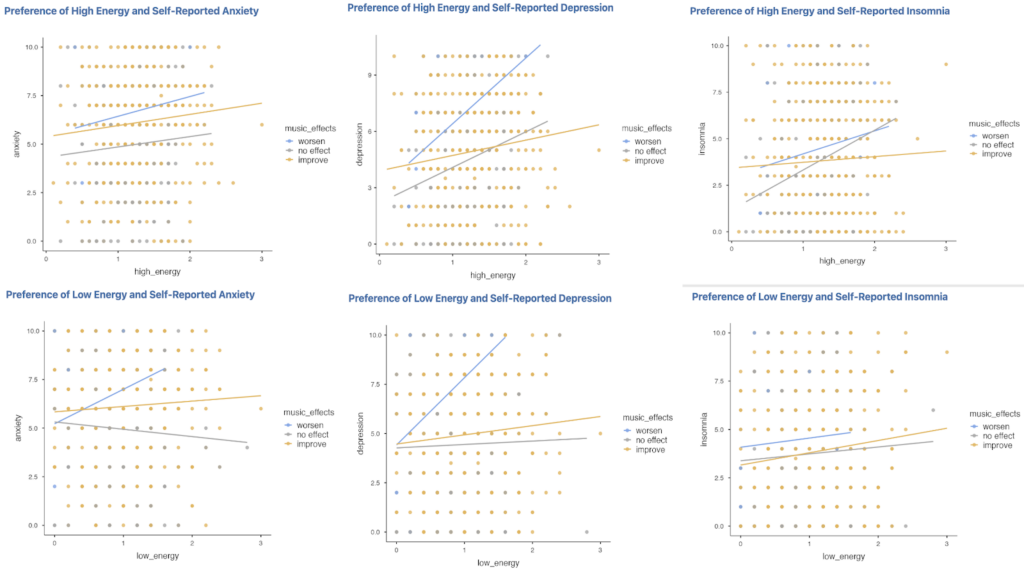
Figure 1.5 illustrates the correlation between preference of high-energy versus low-energy genres and a range of mental-health symptoms: anxiety, depression, and insomnia. Each independent panel therefore compares genre preference with average self-reported symptoms, utilizing color-coded points for distinguishing whether participants believe music improves, worsens, or has no meaningful effect on their general mental health. The inclusion of trend lines on the plots encourage greater readability and stronger visual interpretation of each group’s direction, as well as the strength of their association. Additionally, we constructed several scatterplots to ensure that the extensive set of variables were appropriately represented and examined.
Each scatterplot in Figure 1.5 clearly demonstrates an apparent pattern, in which greater preference for high-energy genres (rock, hip-hop, EDM, metal) is tied to higher reported anxiety, depression and insomnia ratings. Thus, this implies that those who gravitate toward high-intensity music tend to report heightened symptoms, particularly when they believe that music aggravates their current emotional state. Alternatively, these findings illuminate how low-intensity genres (classical, folk) typically demonstrate weaker correlations with reported symptom severity, leading to the conclusion that such genres may possess a more emotionally stabilizing effect or coping outlet for these listeners. This is primarily due to lower-intensity genres exuding a more calming effect.
As a whole, these scatterplots deduce that the musical genre does indeed play a significant role in shaping, or altering, mental-health experiences from a symptom-based perspective. Specifically, high-energy genres suggest positive associations with enhanced stress, arousal, and dysregulatory effects, those of which could possibly aggravate symptoms of anxiety or insomnia. Faster-tempos and intense lyrics could potentially amplify stress-arousal symptoms. In contrast, low-energy genres appear to demonstrate a potential association to emotional regulation and general psychological alleviation. While these findings do not assert causation, the consistency in direction-based patterns across each metric does reinforce the notion that listening habits closely interact, and even intertwine, with pre-existing psychological propensities. The apparent patterns therefore grant us a more structured foundation for music’s equitable or heightening influence on individuals’ emotional wellbeing, serving to contextualize the wider range of associations we explore throughout our project. While there is no definitive answer set in stone, the trendline can allow future researchers to identify emerging patterns, and make more informed inferences about how these associations may grow overtime
Nuanced Variable-Specific Musical and Psychiatric Findings
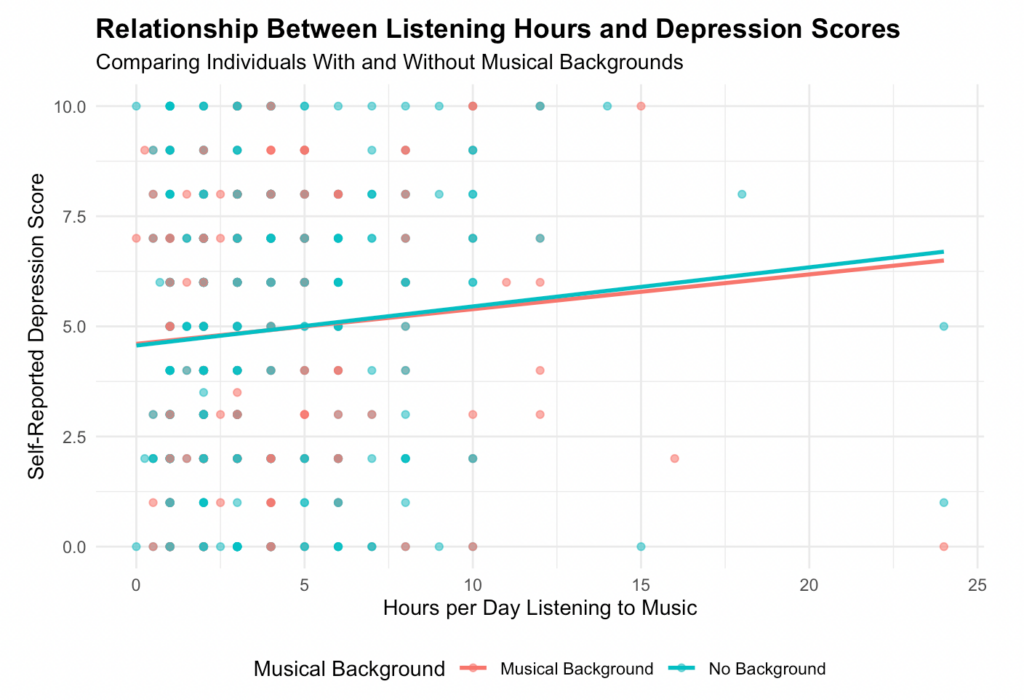
This scatter plot uses regression lines to depict the relationship between the number of hours per day spent listening to music and the respondents’ self-reported depression scores, while distinguishing between those with and without a musical background. These trends grant a clear snapshot of each category’s general direction as well as the relative soundness of association, visualizing the extent with which listening duration interacts with overall musical experience. From Figure 1.6, we observed a moderate positive relationship between listening duration and overall depression scores, meaning that participants who spend more time listening to music tend to report slightly higher levels of depressive symptoms. However, once individual musical background is taken into account, a key component within our scope is clarified, in which those with a musical background (playing, composing) display a distinctly flatter regression line, suggesting that their depressive symptoms increase more gradually as listening duration extends. In contrast, those without a musical background demonstrate a sharper escalatory trend, therefore implying that heavier listening duration may correlate with higher depressive symptoms for non-musicians.
This key distinction entwines within one of our project’s core themes: the underlying purpose behind musical engagement, in various facets, facilitates and molds emotional outcomes. For certain sublets of respondents, particularly those with a musical background, musical engagement may serve as an expressive or structured outlet, whether a tool for emotional processing, mood regulation, or even coping with stress. Alternatively, those without a musical background or don’t actively participate with music composition, may generally utilize music for emotional escapism or unproductive management, suggesting a shift toward more intensive, prolonged listening during stages of greater emotional turbulence. Therefore, this visual reinforces how listening to music is not simply an immutable behavior, but rather its influence on personal mental health is dependent on both how and why individuals engage with it.
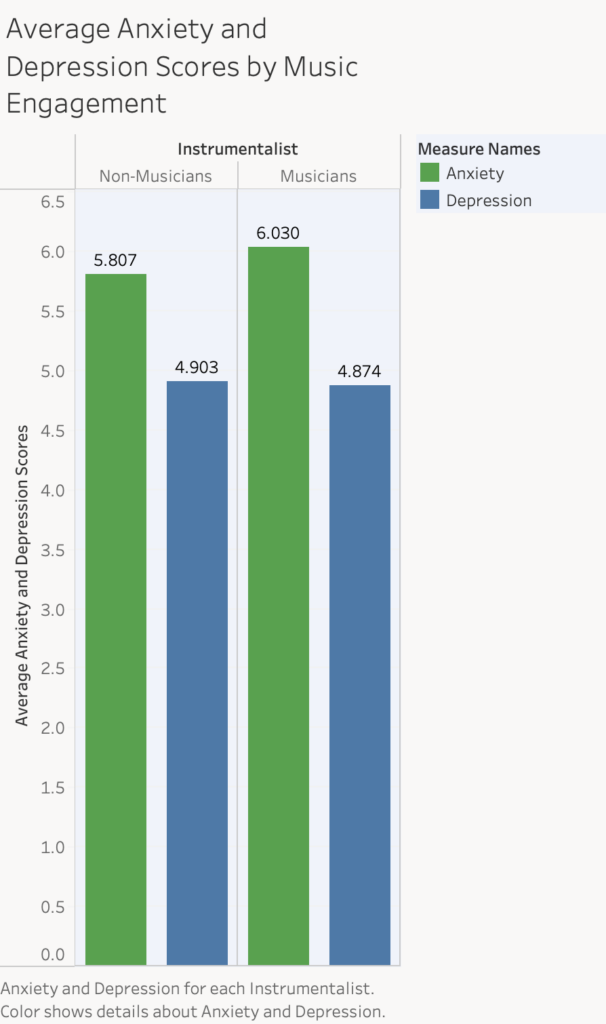
Branching from the distinction between listeners with and without musical backgrounds, our next representation shifts from listening duration to a more direct comparison between musicians and non-musicians, exploring how their average anxiety and depression score differ overall. Figure 1.7 allows for a direct comparison between two distinct categories, musicians and non-musicians, across various quantitative variables, including average self-reported anxiety and depression scores. This chart type effectively illustrates how the two groups contrast within each mental health measure, allowing for efficient and concise interpretation across the subtle variations between average scores. In addition, the use of distinct color differentiation, including green for anxiety and blue for depression, creates strong visual clarity and cohesion between both dimensions while maintaining a degree of simplicity and readability. Further, the categorical format and legend (including modifying the 0 and 1 values to distinct “Musicians” and “Non-Musicians” categories) were a crucial step in clarifying the data visualization in a manner that best reflected the findings within this subset, as well as best suited the stylistic approach within our research scope.
Within the context of our project’s objective, analyzing the correlation between various elements involving music and mental health, this visualization demonstrates that musicians report slightly higher anxiety levels (Average: 6.03) compared to non-musicians (Average: 5.81), while depression scores remained consistently similar between both groups (Musician: 4.87, Non-Musician: 4.90). Thus, this suggests that while contributing to musical creation (i.e., musicians) could potentially aid in emotional expression as well as beneficial coping mechanisms, alternatively, it could potentially be linked to higher self-prompted pressures or performance-induced stress levels. Thus, the results illuminate nuanced, complex variations in mental health outcomes related to music engagement type, granting greater insight into how musical or artistic contributions could both alleviate and exacerbate specific psychological impacts.
Conclusion
Our research’s purpose was to explore how different music genres and listening habits have an influence on general mental health, including conditions such as depression, anxiety, and insomnia. From past research, music was found to have beneficial effects on emotional regulation in boosting mood and improving cognitive functions, such as memory and focus. As a result, our group wanted to learn more about the complex relationship between music and mental health among different sublets of the global population. From our datasets and academic sources, we discovered that compared to low-energy music genres, high-energy music genres were correlated with higher levels of anxiety, depression, and insomnia scores. We also noticed how different life stages and predispositions played a significant role in music’s influence on an individual’s overall well-being. However, one surprising finding was that people with longer listening hours tended to show more signs of depression and anxiety, which contradicts the general belief that music aids with mental health symptoms. Thus, these results suggest that listening to certain music genres can be used as a beneficial tool to manage stress and cope with mental health issues, although it may vary based on unique, individual experiences. Ultimately, our findings showcase music’s potential as a tool to improve one’s emotional well-being when tailored to each individual’s needs and background.
Conjunctively, our research scope truly underscores that music’s unique relationship with mental health is neither fixed nor universal, but rather deeply shaped by individual variables and personal background. By integrating global trends and progressive frameworks with highly nuanced and variable-specific findings from our datasets, our work illuminates how music can both reflect and regulate diverse emotional states in significantly individualized manners. Such insights not only promote enrichment from existing academic studies, yet simultaneously highlight the immense value in tailoring musical interventions to address the needs of distinct populations and unique psychological profiles. Thus, as digital mechanisms continue to progress and broaden our ability to interpret complex data from a visual lens, multifaceted studies such as ours essentially grant insight into how interdisciplinary methods can enhance our knowledge of wellness-based support, reinforcing music’s invaluable role in daily emotional existence.